Understanding Whisky Production: From Grain to Glass
Whisky production is both an art and a science, refined over centuries in Scotland. Understanding the process helps you appreciate the spirit you're drinking and explains why different whiskies taste so distinctly different.
The journey begins with malting, where barley grains are soaked in water and allowed to germinate. This converts the grain's starches into fermentable sugars. The grain is then dried in a kiln, traditionally using peat smoke in Scottish distilleries, which imparts distinctive smoky flavours.
Next comes mashing, where the dried malt is ground and mixed with hot water to extract the sugars. This creates a sweet liquid called wort. The leftover grain solids are often sold as animal feed, so nothing is wasted.
During fermentation, yeast is added to the wort. Over several days, yeast converts the sugars into alcohol and creates congeners—flavour compounds that give whisky its character. Different yeast strains and fermentation temperatures produce different flavour profiles.
Distillation is where the magic happens. The fermented liquid is heated in copper stills, and alcohol vapours rise and condense back into liquid form. This process concentrates the alcohol and flavours. Most Scottish distilleries use two or three distillations to achieve their desired spirit character.
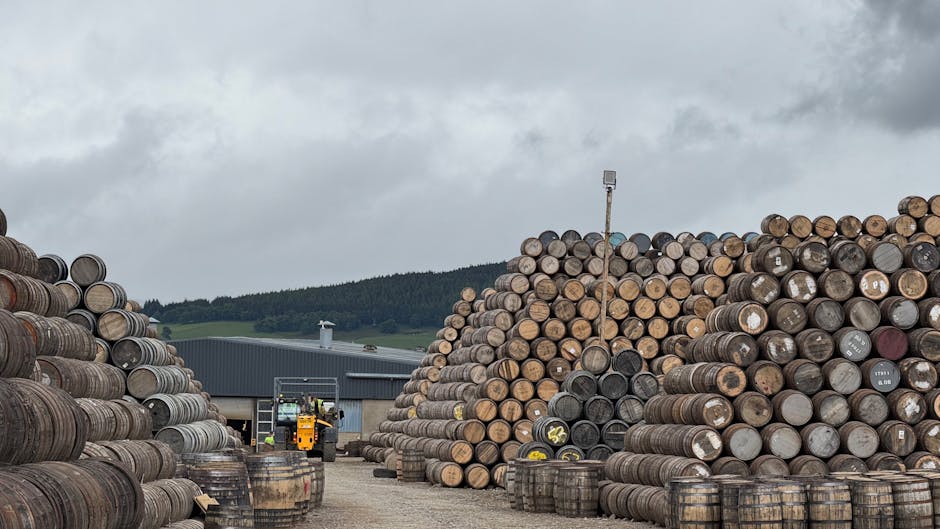
The clear spirit that emerges from distillation is called new make. It's colourless and harsh, nothing like the golden whisky you know. It must legally be aged in oak casks for at least three years to be called Scotch whisky.
During maturation, the spirit interacts with the wood, extracting colour, flavour, and smoothness. The type of oak cask—whether previously used for bourbon, sherry, or wine—dramatically influences the final whisky's taste. Some distilleries use first-fill casks for richer flavours, while others use refill casks for subtler results.
Finally, the mature whisky is bottled. Some distilleries bottle at cask strength for maximum flavour, while others dilute with water to reach standard alcohol levels, typically 40% ABV or higher.
Each distillery's unique combination of water source, barley selection, still shape, yeast strain, and cask choice creates its signature flavour. That's why a Speyside whisky tastes completely different from an Islay whisky, even though both follow the same basic process. Understanding these steps deepens your appreciation for this remarkable drink.